Policy Watch: India’s Place in the World – November 2025

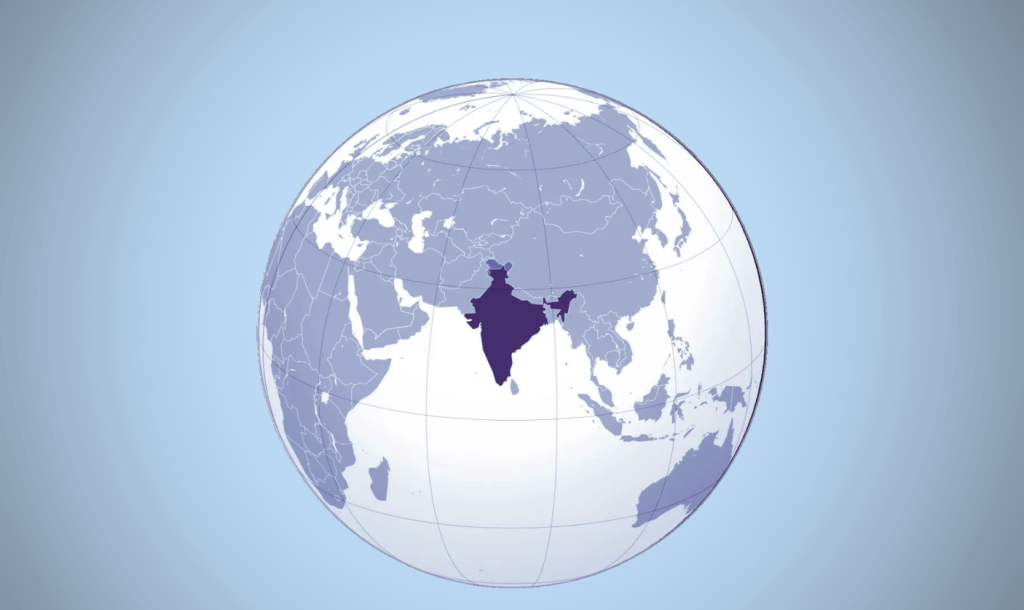
This issue of Policy Watch is on the theme India’s Place in the World and has been put together by RGICS Senior Visiting Fellow, Prof Somnath Ghosh, who did his doctoral work at the Jawaharlal Nehru University’s School of international Studies. The issue focuses on the first sub-theme – India’s Neighbours. But as the last two issues on India’s Place in the World indicate, India’s relations with neighbours have been marked by turbulence, even as India’s economic and military power have risen.

We focus on contemporary events that have bearing on India’s relations with her neighbours. We begin with an analytical article by Partha S Ghosh, retired Professor of South Asian Studies at Jawaharlal Nehru University. This is an overarching piece which sets the tone for other pieces in this issue. He examines PM Modi’s foreign policy challenges in the context of America, China and South Asia. In this he systematically takes critical issues pertaining to India’s relations with United States, China, Afghanistan, Bangladesh, Nepal, Pakistan and Sri Lanka – and weaves them into a coherent whole.

Next, we present three articles on with China, whose power and influence is so large that we can pretend to be nonchalant at great cost. This is best reflected in Stanly Johny’s short essay, “The rise of G2” where, ahead of meeting Chinese President Xi Jinping on October 30 in Busan, South Korea, U.S. President Donald Trump framed the talks as “a G2 summit”. Johny says, the message was clear. Washington looks at China as a peer superpower, and wants strategic stability in the bilateral relations between the two. This is followed by Shubhajit Roy’s “3 takeaways from Xi-Trump meeting”, With this as the foreground, the import of Udit Misra’s “Why trading with China, as against the US, poses more challenges for India” becomes compelling reading.

Even after Operation Sindoor, Pakistan continues to be India’s bête noire. After tomtomming its nuclear deterrence, it has now signed a “strategic mutual defence agreement” with Saudi Arabia. It is in this context that we reproduce Soutik Biswas’s piece, “Why the Pakistan-Saudi Arabia defence pact is unsettling India”.

Afghanistan – or more appropriately, the Taliban – our other neighbor, has also engaged our attention. While Afghanistan was virtually the sole country that supported India loudly on Operation Sindoor, India’s strategic interests are likely to be served immensely given Afghanistan’s continuing animosity with Pakistan.

However, analysts have advised caution in dealing with the Taliban. Najeeb Jung, former civil servant and who was earlier the Vice Chancellor of Jamia Millia Islamia, and former Lieutenant Governor of Delhi, talks about the perils of engaging with the Taliban and cautions that the immediate gains may lie in intelligence access and regional influence but there can be deeper costs. This is followed by Shashi Tharoor’s piece where he advocates that India’s Taliban outreach requires reconciling principles with pragmatism. In the next essay, Stanly Johny is more forthright: “engage the Taliban, don’t recognise them”. We wrap up our Afghanistan section with Suhasini Haidar’s “How are India-Taliban relations changing”.

Next, the 47th ASEAN Summit and Related Summits was recently held in Kuala Lumpur between October 26-28. In this context we reproduce a short article that carries an interview with Ambassador Ashok Sajjanhar, who negotiated for the India-EU India-ASEAN trade deals. In this, Sajjanhar explains why ASEAN is relevant for India, and where do its members stand on the US-China trade dispute.

We wrap up this issue by a “sympathetic” piece by Somnath Ghosh, Senior Visiting Fellow at RGICS. His paper, “Difficult to be a Diplomat in these Trying Times”, holds that the alignment and dynamics of power play, itself an outcome of economic and military might, leave little room for manoeuvre for the mandarins and their political masters both at North and South Block and for this, the mandarin has to be a strategist, a pugilist, as well a trapeze dancer.

Policy Watch: India’s Place in the World - November 2025

Download PDF

Send download link to:

Share:

Categories
Latest Publicatons

हिमाचल प्रदेश की पर्यावरण, सामाजिक एवं आर्थिक स्थिति का आकलन एवं प्रदेश में हरा भरा स्वराज स्थापित करने की समावेशक योजना

यह दस्तावेज़ हिमाचल प्रदेश की पर्यावरणीय, सामाजिक और आर्थिक स्थिति का समग्र